
California Gun Charges: Penalties and How to Fight Them
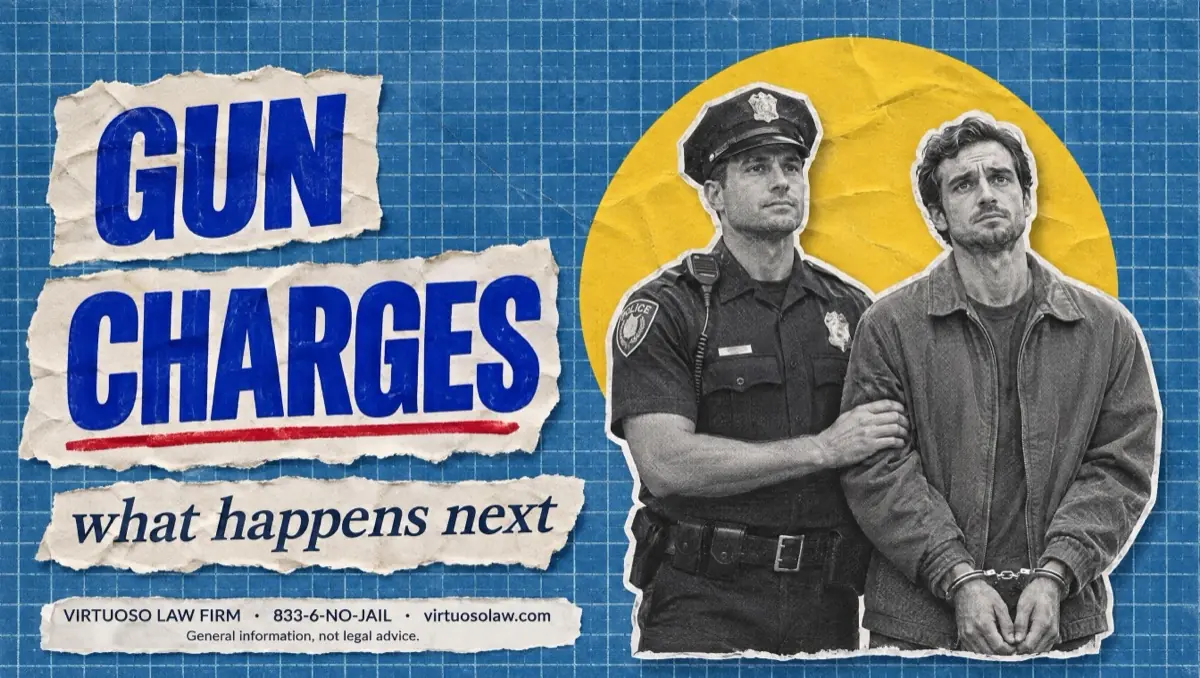
California has some of the strictest gun laws in the country, and plenty of people get charged without ever thinking they did anything wrong. A handgun forgotten under a car seat can be enough for a concealed carry charge. So can lending your car to a friend who finds the gun in the glove box.
Most gun cases come from a short list of Penal Code sections. This guide covers the charges we see most often and how they are usually defended. Every case turns on its own facts, so treat it as a starting point and not as legal advice for your situation.
Carrying a concealed firearm (PC 25400)
This charge applies when a gun is hidden on your body or inside a car you are driving or riding in, and you do not have a license to carry concealed. Some people are exempt, including licensed dealers, members of the military and licensed hunters who are transporting unloaded guns. The details are on our page about carrying a concealed firearm.
Prosecutors can file it as a misdemeanor or a felony. A misdemeanor carries up to one year in county jail and a fine of up to $1,000. A felony carries 16 months, two years or three years, with a fine of up to $10,000. A judge can also grant probation in either case.
Carrying a loaded firearm in public (PC 25850)
On its own, this is a misdemeanor. It can be charged as a felony if you have certain prior convictions or you are not the gun's registered owner, and some versions are always felonies. The penalties match the ones for concealed carry.
The prosecution has to prove that you knowingly carried the gun. It does not have to prove that you knew the gun was loaded. Our page on carrying a loaded firearm in public explains the exemptions and defenses.
Felon in possession (PC 29800)
If you have a felony conviction, you cannot own or possess a gun in California. The ban also covers people convicted of certain misdemeanors, domestic violence among them, and people under a domestic violence restraining order. A conviction carries 16 months to three years in state prison.
Many people are surprised by "constructive possession." The gun does not have to be on you. If it was somewhere you controlled, like your home or your car, prosecutors can still say it was yours. This comes up often when someone with a record lives with a person who legally owns guns. We cover it on our felon in possession page.
Brandishing and assault with a firearm (PC 417 and PC 245(a)(2))
Brandishing means showing or drawing a gun in a rude, angry or threatening way, or during a fight or argument. The gun does not have to be loaded or pointed at anyone. As a misdemeanor it carries three months to a year in county jail when it happens in public. As a felony it carries 16 months, two years or three years in state prison. See our page on brandishing a firearm.
Assault with a firearm is more serious. Nobody has to be hurt and the gun does not have to be fired. A conviction counts as a strike under California's Three Strikes law. The prosecution also has to show you had the present ability to use the gun, which is why pointing an unloaded gun usually cannot support this charge. Read more about assault with a firearm.
Unsafe storage and failing to report a lost or stolen gun
Two charges catch people who never carried a gun in public. Criminal storage (PC 25100) applies when you keep a loaded gun where a child, or someone who is not allowed to have a gun, is likely to get to it. The two lowest degrees are misdemeanors. The highest degree, where someone is seriously hurt or killed, can be charged either way. More detail is on our criminal storage of a firearm page.
PC 25250 requires you to report a lost or stolen gun to law enforcement within five days of when you knew, or should have known, about it. If you report it and later get it back, you have five days to tell police that, too. Our guide to reporting a lost or stolen firearm walks through it.
How gun charges are usually fought
Many gun cases are won or lost on how police found the gun. If the traffic stop, the search or the seizure broke the law, the gun can be kept out of evidence, and the prosecution may have little left.
Other defenses depend on the charge:
- You did not know the gun was there, which comes up often with a car or a home shared with other people.
- You did not have possession or control of the gun.
- You were licensed or exempt, or the gun was unloaded and being transported lawfully.
- You acted in self-defense.
- For felon in possession, the earlier conviction behind the ban may be open to challenge.
What to do if you are charged
- Do not answer investigators' questions without a lawyer. Our guide to your rights with police in California explains what to say.
- Do not move, sell or hide the gun. That can lead to new charges.
- Write down what happened, who was there and where the gun was while you still remember it clearly.
- Call a defense lawyer before your first court date. Our page on what to do if you are arrested lays out the next steps.
Can you get your gun rights back?
A conviction can cost you your gun rights, but in some cases you can get them back. A felony that could have been charged as a misdemeanor may be reduced under PC 17(b). An expungement can help, but it does not restore gun rights on its own. A governor's pardon is another route. Federal law has its own rules, so relief under state law may not settle the question. Start with our page on restoring gun rights.
If you were arrested in Alameda or Santa Clara County, our Hayward and San Jose offices defend gun cases, and your first consultation is free.